


A touch that survived
Latent fingerprints disappear quickly. A plastic print impressed into clay can instead be fixed by firing and survive for millennia.
Objects have makers
Archaeology can reconstruct raw materials and manufacturing sequences, but it is harder to establish whether women or men, adults, adolescents or learners did the work. Fingerprints are their direct traces.
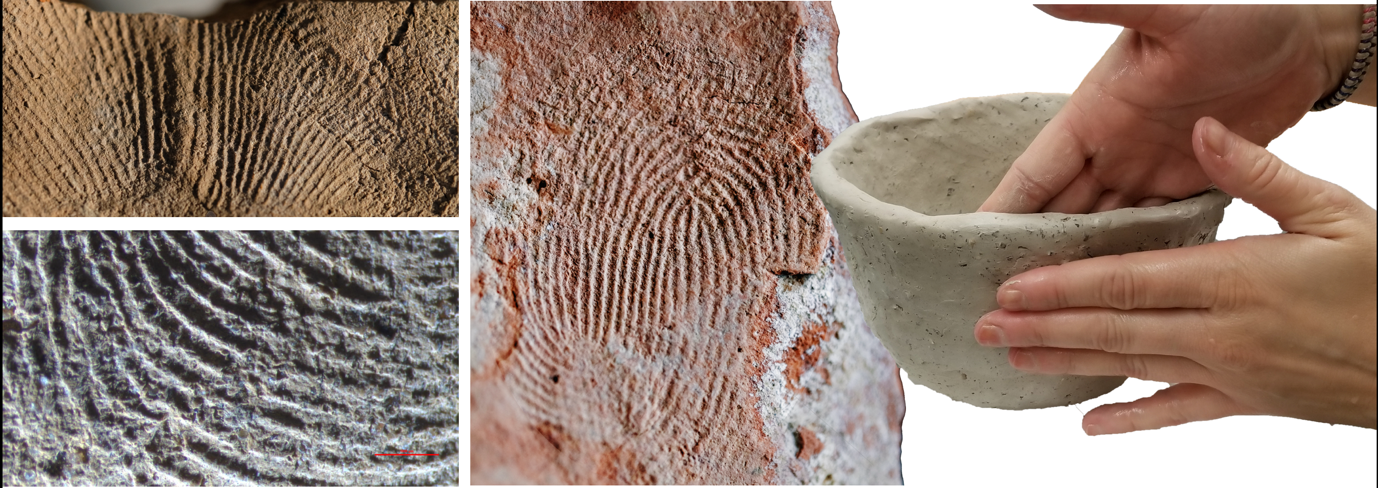
Fire preserved and distorted the trace
Clay contracts during drying and firing. Jon Ross tested 420 samples and found shrinkage of about 6% to 20%. A single universal correction is therefore insufficient.
Why a fraction of a millimetre matters
Biometric estimates depend on tiny differences in ridge breadth and density. An inappropriate correction can change the resulting category and the reconstructed workforce.
History from the workshop
Tracing the Workforce investigates labour, learning and specialisation in the southern Levant between the thirteenth and eighth centuries BCE, returning unnamed makers to history.