


01
What the method shows
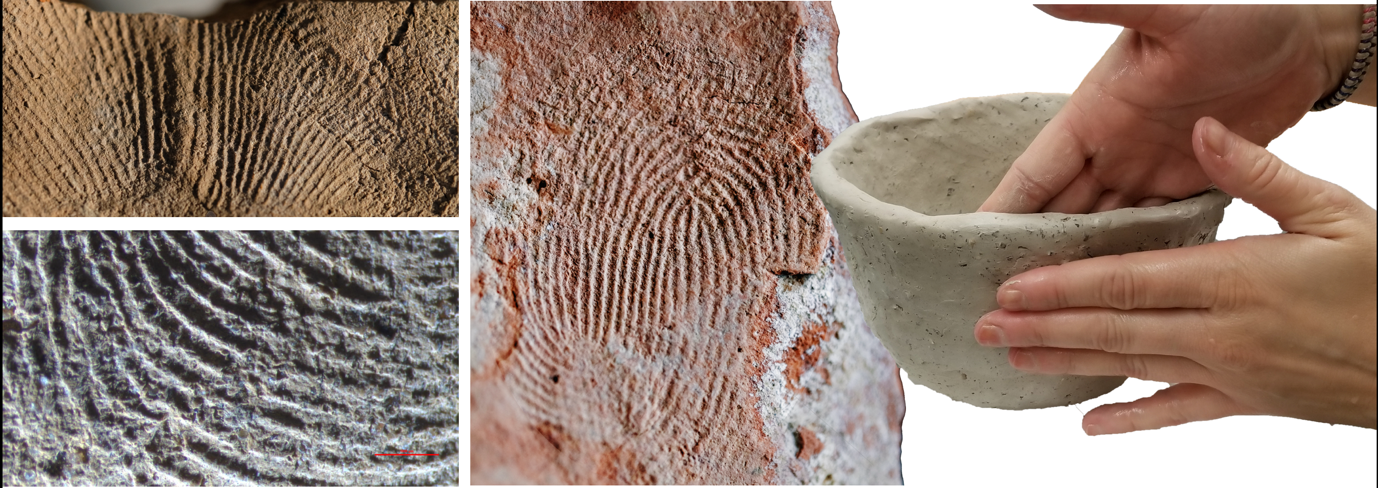
Measuring epidermal ridges in clay, calibrated for shrinkage of the actual ceramic fabric.
02
How it works
Archaeology can reconstruct raw materials and manufacturing sequences, but it is harder to establish whether women or men, adults, adolescents or learners did the work. Fingerprints are their direct traces.
Clay contracts during drying and firing. Jon Ross tested 420 samples and found shrinkage of about 6% to 20%. A single universal correction is therefore insufficient.
Fire preserved the fingerprint but also reduced its dimensions. Reliable interpretation therefore requires correction based on the properties of the actual ceramic fabric.
03
In practice
- Archaeological archivepottery with plastic fingerprint impressions
- Methodspalaeodermatoglyphics, ceramic analysis, experimental archaeology
- MethodsThe experimental programme included 420 samples made from regional clays and different temper types.
- OutputsDifferent corrections can move the same print between age and probable sex-group ranges.
04
Limits and controls
Biometric estimates depend on tiny differences in ridge breadth and density. An inappropriate correction can change the resulting category and the reconstructed workforce.
Measured shrinkage varied from about 6% to 20% depending on raw material and preparation.
05