


420 samples
The experimental programme included 420 samples made from regional clays and different temper types.
ANCIENT FINGERPRINTS
Pottery from one of the largest early urban centres in the southern Levant preserves direct traces of the people who made it.
Results at a glance
The experimental programme included 420 samples made from regional clays and different temper types.
Measured shrinkage varied from about 6% to 20% depending on raw material and preparation.
Fire preserved the fingerprint but also reduced its dimensions. Reliable interpretation therefore requires correction based on the properties of the actual ceramic fabric.
Qedesh lies in the uplands of Upper Galilee. The research connects pottery from the site with regional clay resources and experimental measurements of their shrinkage.
Ridge breadth and density support probabilistic investigation of adults, adolescents, women and men involved in production.
Drying and firing reduce both the clay body and its print. Biometrics can be distorted unless shrinkage of the relevant fabric is measured.
Fingerprints help investigate division of labour, specialisation and the transmission of craft knowledge.
The experimental programme included 420 samples made from regional clays and different temper types.
Measured shrinkage varied from about 6% to 20% depending on raw material and preparation.
Different corrections can move the same print between age and probable sex-group ranges.
Interpretation of workforce composition must be grounded in experimentally measured shrinkage.
The study presents the first experimental dataset of this scale linking fingerprints on pottery from Qedesh with measured shrinkage of regionally relevant clays and temper types. It demonstrates that generic predetermined corrections are insufficient for reliable biometric interpretation.
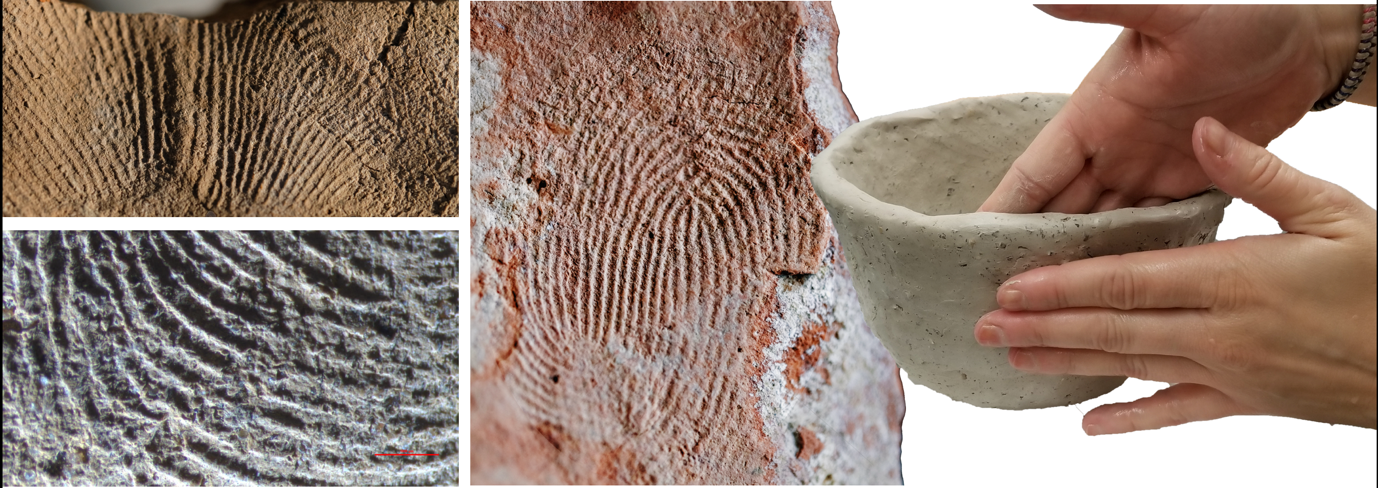
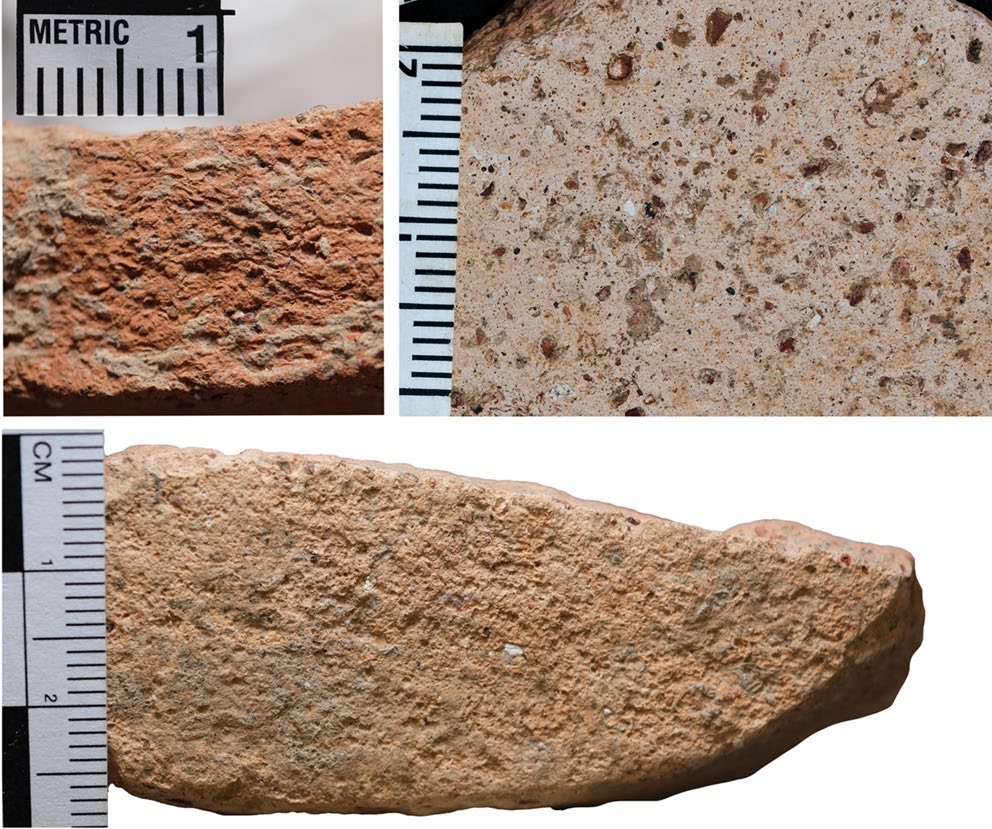
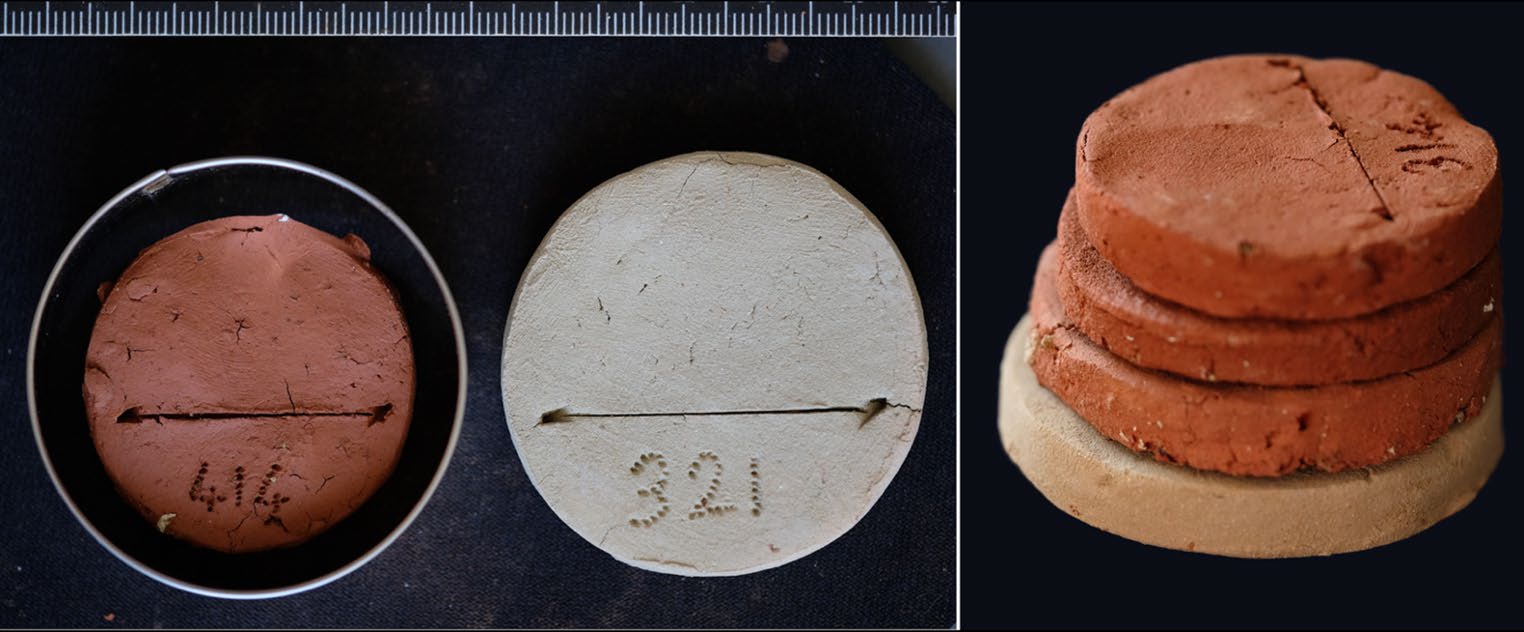
An ordinary touch can survive for millennia and become archaeological evidence. Its meaning emerges by connecting biometry, ceramic technology, experiment and context.
Jon Ross, collaborators of the Qedesh project and Human Earth Lab, Department of Archaeology, Charles University.
Full profile →Open Access study, visual documentation, experimental shrinkage data and a methodological framework for ancient fingerprint analysis.
Result details →