

Meeting and possible collaboration
Beneath Santiago Cathedral: people, health and traces in the soil
A meeting with Mario Pereiro opened a possible collaboration on the early medieval cemetery, intestinal parasites and soils beneath the Cathedral.
7 October 2026 · Santiago de Compostela · Spain
The meeting
Meeting in Santiago
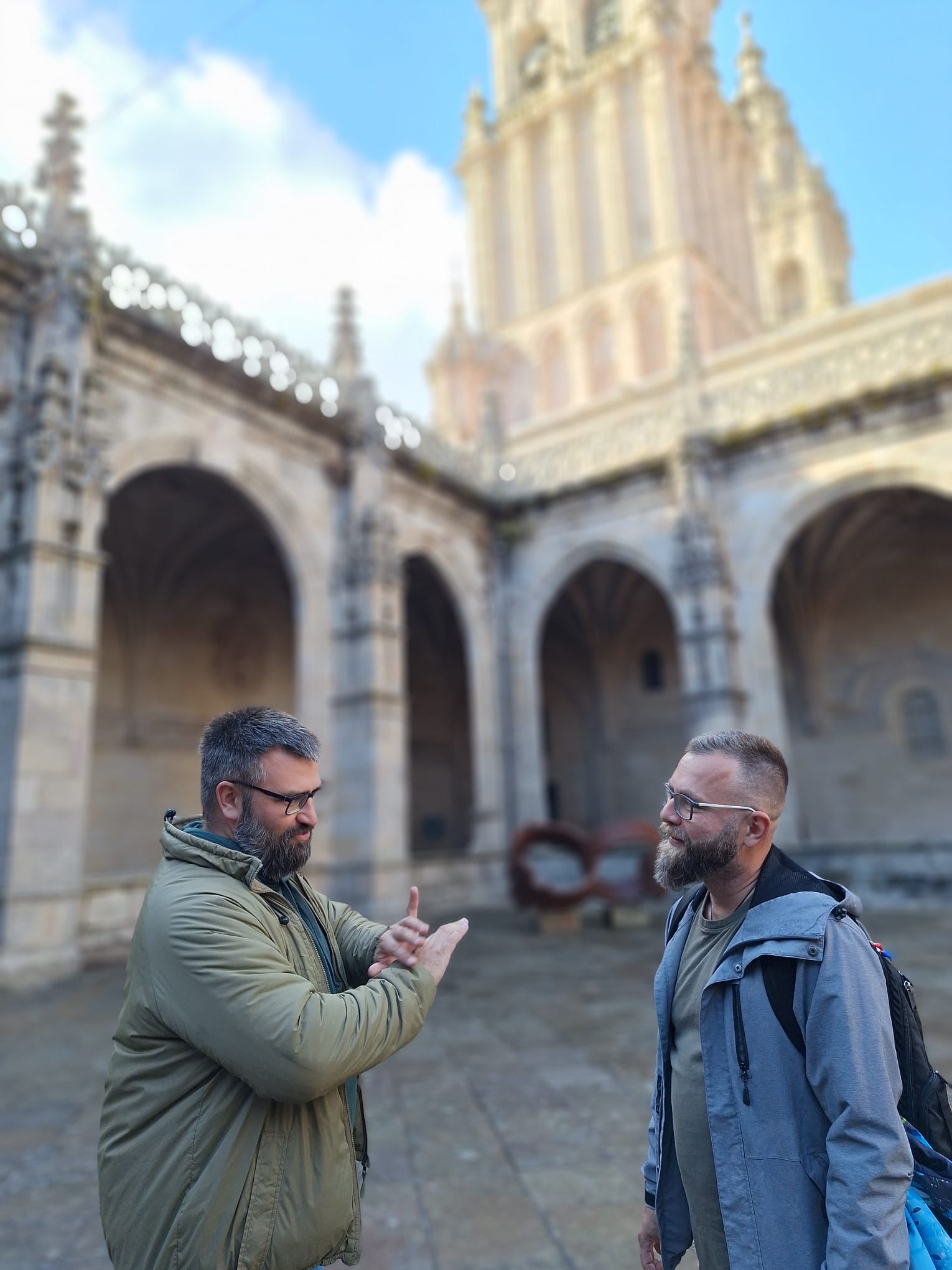
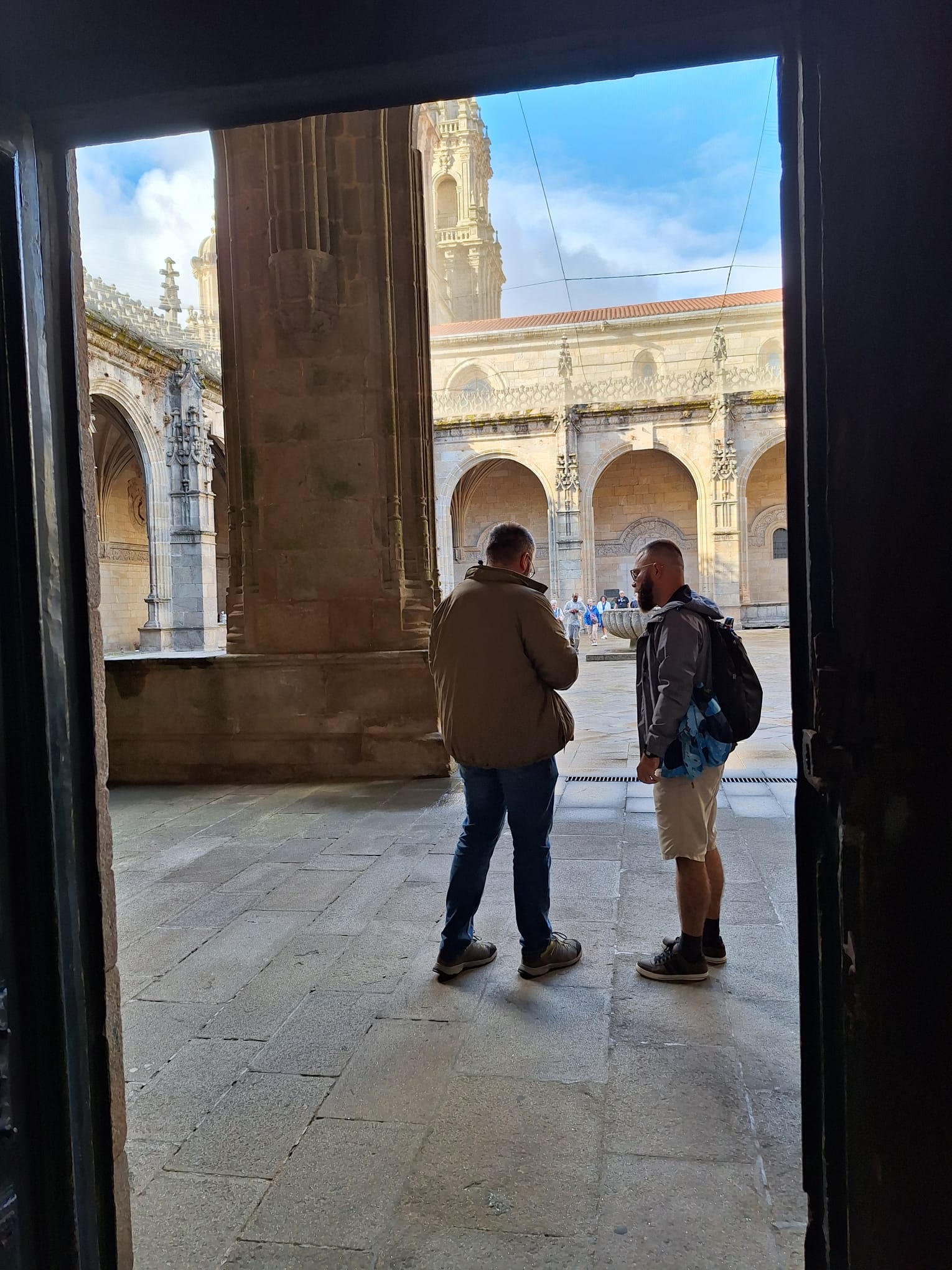
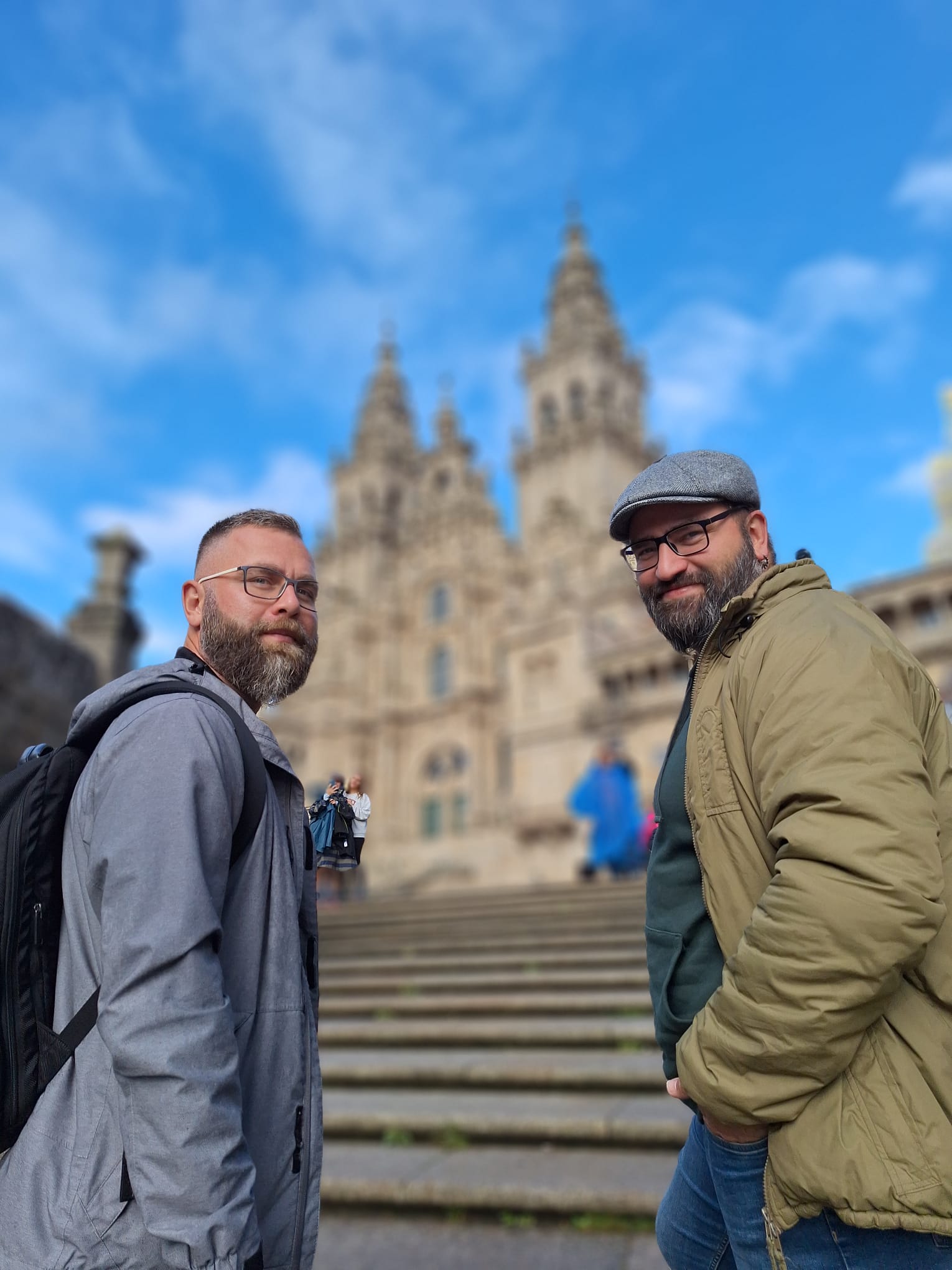
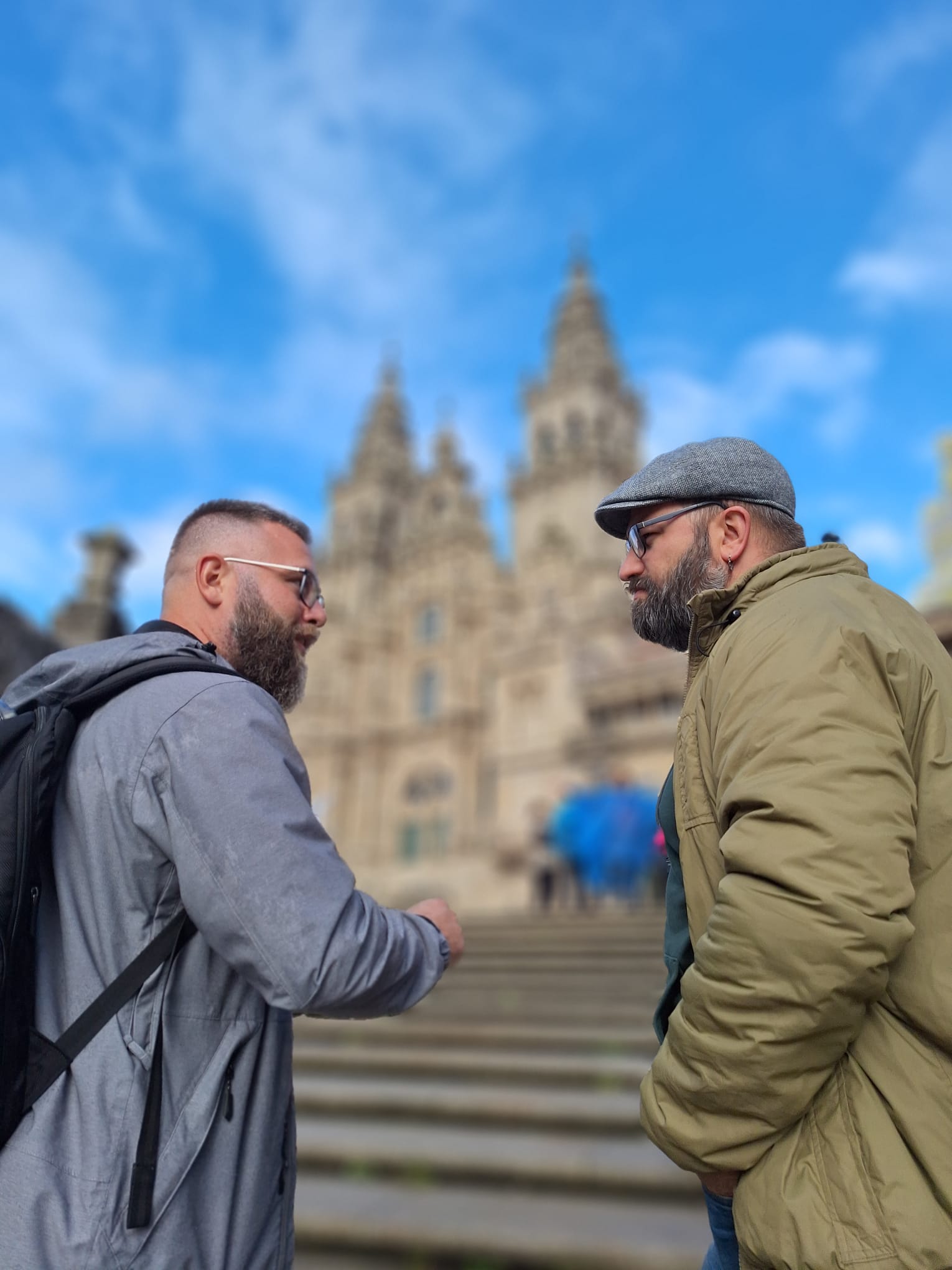
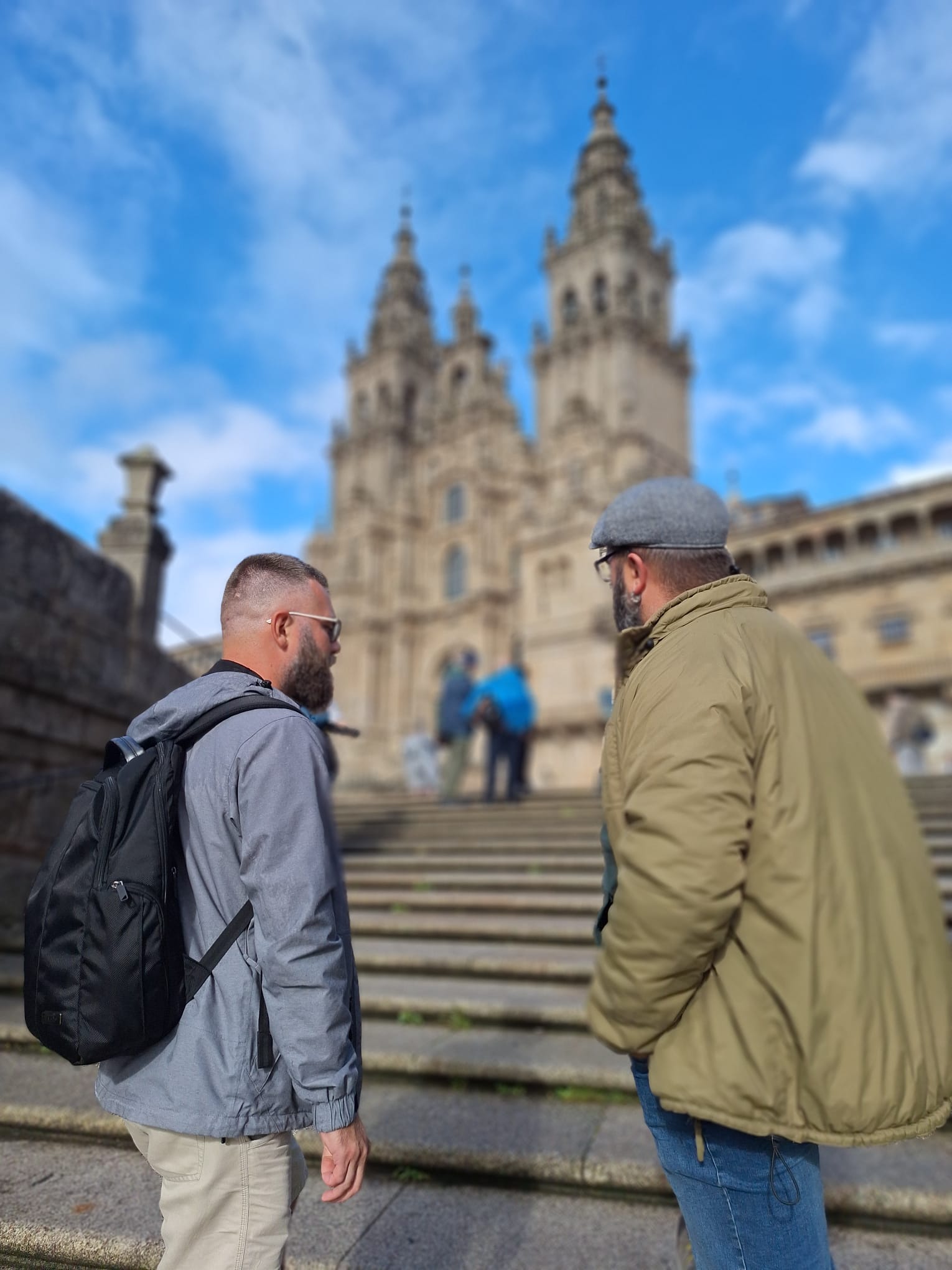
On 7 October 2026, we met in Santiago de Compostela with archaeologist Mario Pereiro Fernández, a member of Human Earth Lab’s Advisory Board. We discussed possible collaboration on research taking place directly beneath the Cathedral.
Mario and I have been colleagues for several years. We first met during my stay at the Institute of Archaeology at University College London. In Santiago, Mario introduced the planned archaeological work and ways to connect the cemetery research with the analysis of its sediments and soils.
Cathedral and city
A city beneath the Cathedral
Santiago de Compostela stands alongside Jerusalem and Rome as one of Christianity’s three great pilgrimage cities. For centuries, pilgrims, traders and people settling near the shrine have gathered here. Learn more about the pilgrimage tradition in Santiago.
Beneath today’s Cathedral lie traces of Roman occupation, the earliest medieval buildings and an extensive cemetery. Archaeological research has uncovered graves dating mainly from the ninth to twelfth centuries; some still preserve the buried people in their original positions. Read more about the archaeological work beneath the Cathedral.
Parasites and soils
What parasites can tell us
The team will also study traces of intestinal parasites that affected the people of early medieval Compostela. Paleoparasitology looks for microscopic evidence of parasites in archaeological samples and helps reconstruct health, hygiene, diet and everyday living conditions.
Mário will lead the archaeological fieldwork directly beneath the Cathedral. CISPAC’s public announcement names Ramón López Gijón as principal investigator of the wider paleoparasitological project and lists Mário as a member of the team. Read the CISPAC announcement of the paleoparasitology project.
Possible collaboration
How Human Earth Lab could contribute
Human Earth Lab hopes to contribute by analysing sediments and necrosols: soils formed or substantially changed by burial and cemetery activity. They can preserve evidence of layers being laid down, graves being dug, bodies decomposing and later disturbances.
Microscopic and geochemical study of these soils can help show how the cemetery developed and the conditions in which biological traces were preserved. It would add the history of the deposits themselves to the paleoparasitological work. Exact samples and methods will be agreed with the research team.
With thanks
With thanks
I thank Mário for his time, open conversation and many years of collegial friendship. I also thank Santiago de Compostela for its warm welcome and for being a place where the past is recalled at almost every turn.
Martin Janovsky
Photographs from Santiago