Field research · Prague
What lies beneath Wenceslas Square?
We are sampling soil on the Würm-age terrace to find out how this surface formed before the medieval town emerged.
· Wenceslas Square, Prague · #HELnow
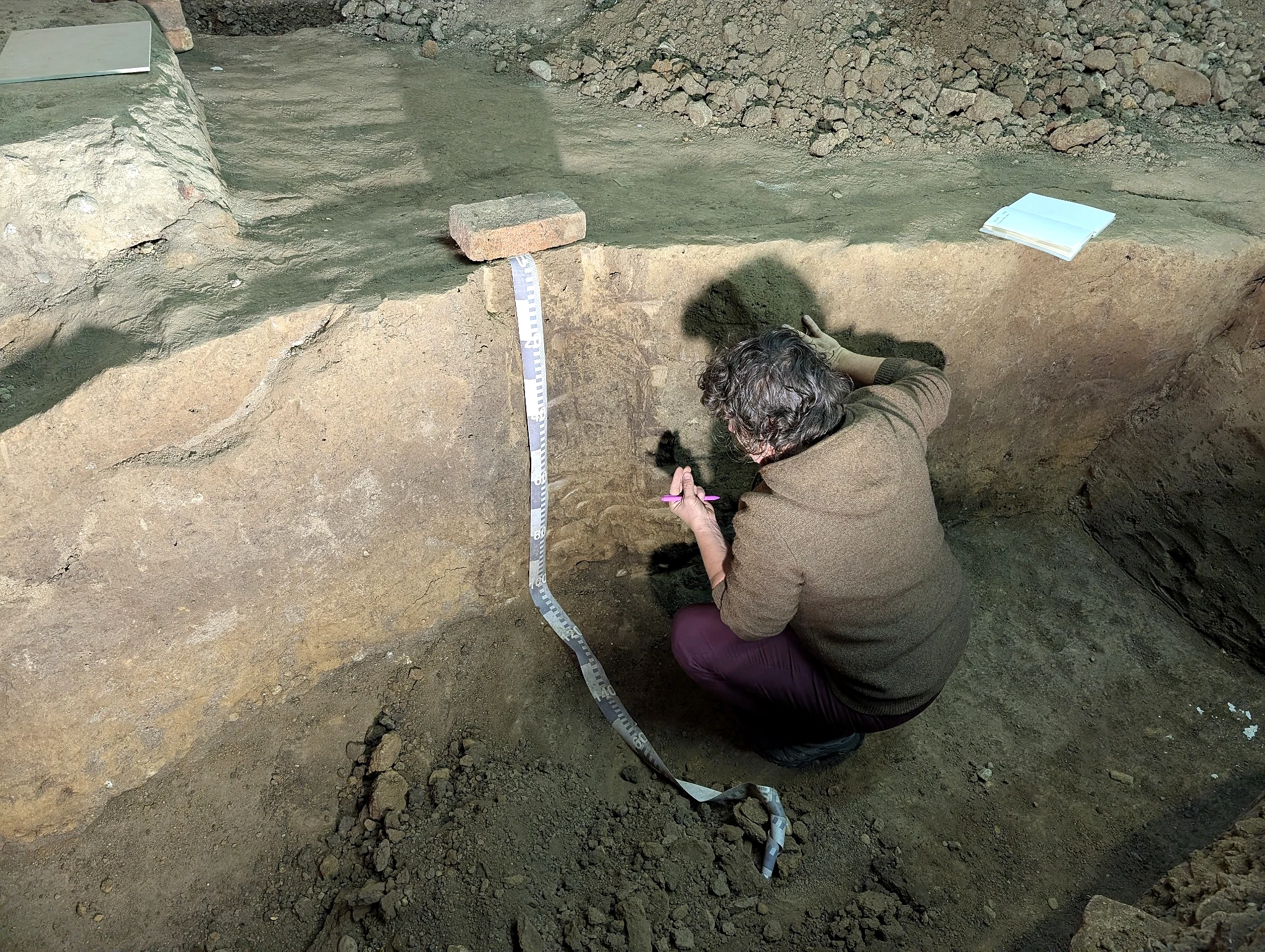
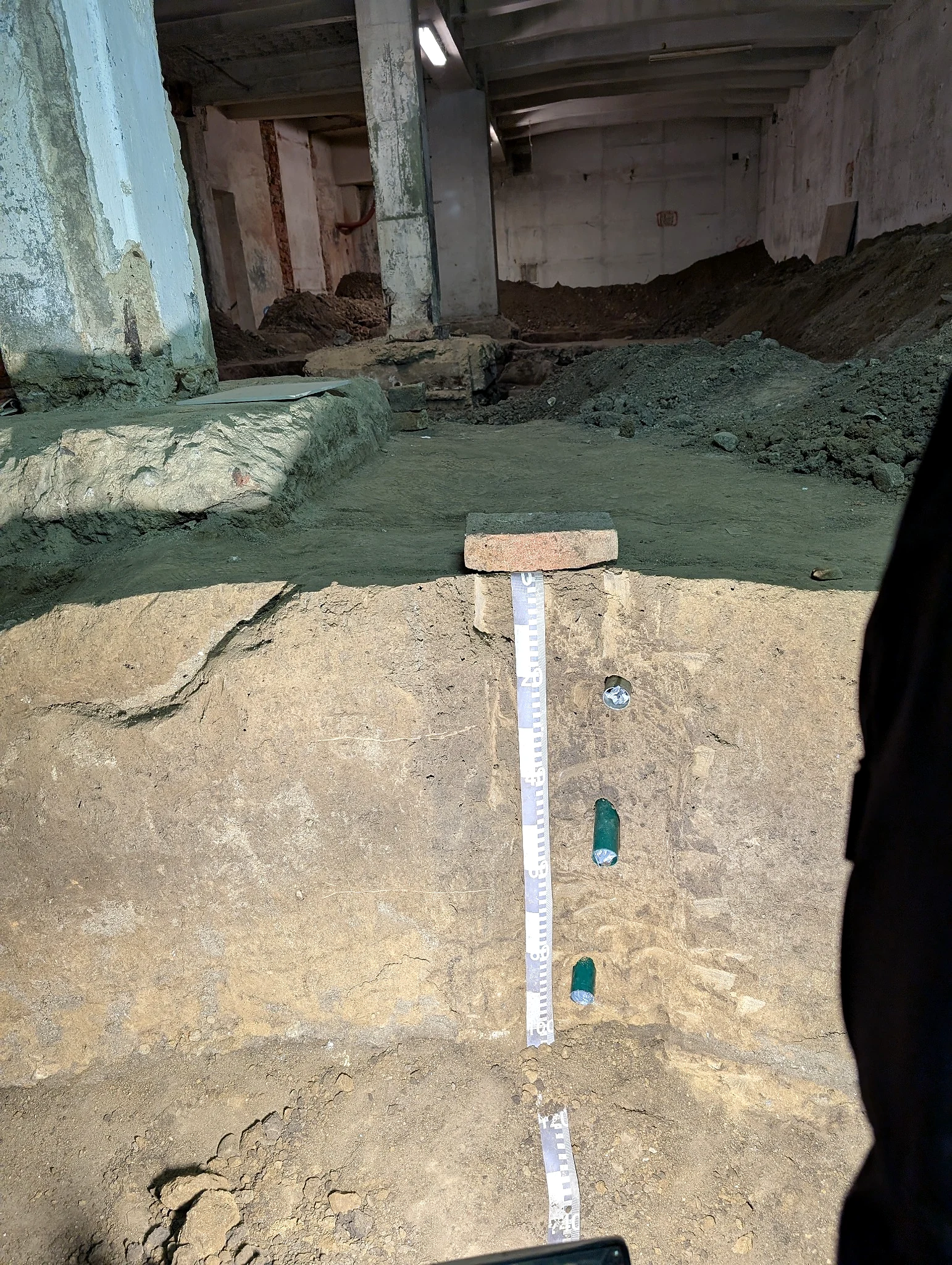
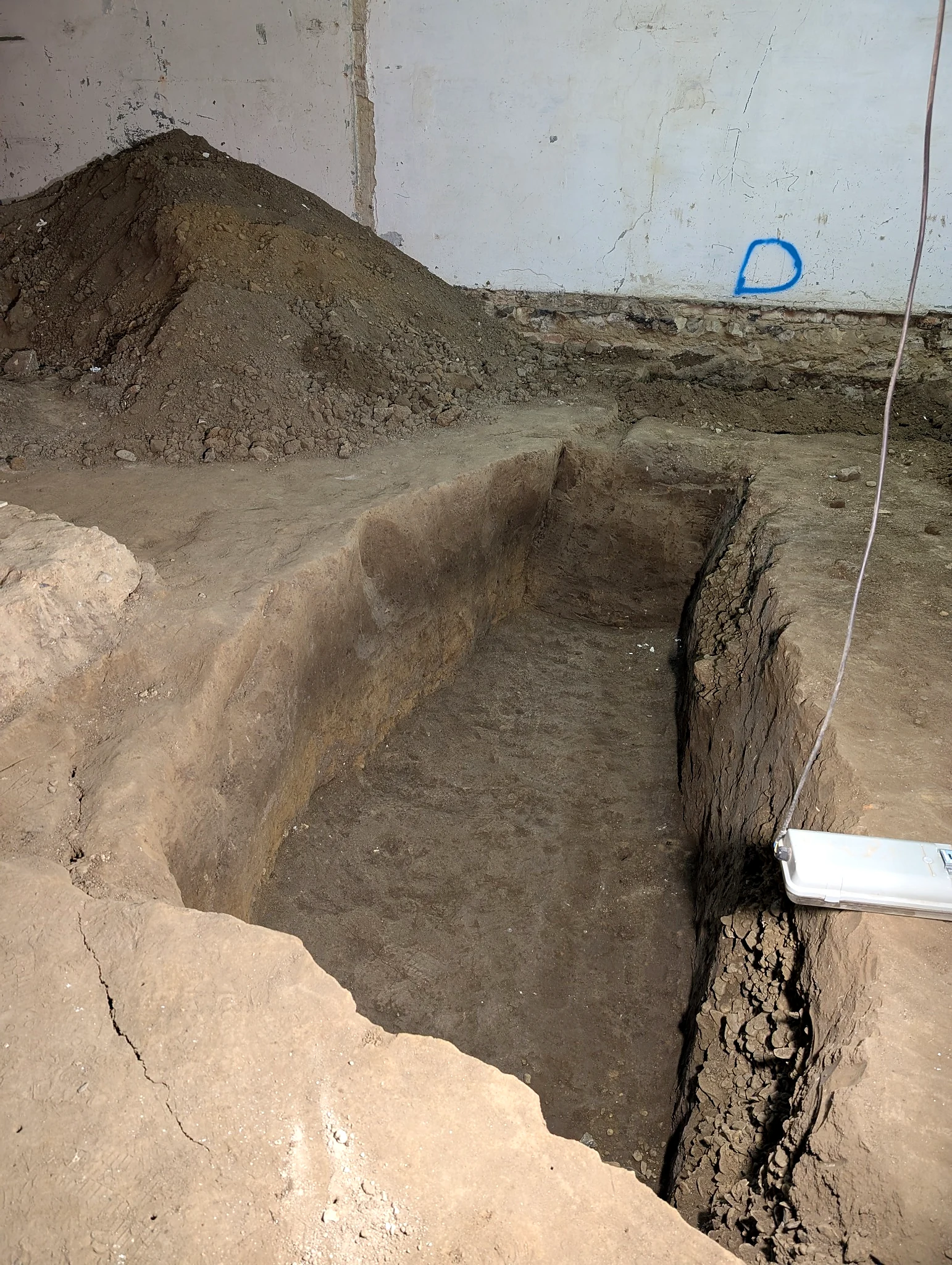
Today, we sampled soil developed on sediments of the Würm-age river terrace in the central part of Wenceslas Square. The work is taking place within an archaeological excavation of the National Heritage Institute (NPÚ), directed by Jan Havrda. Geoarchaeological sampling was carried out by Martin Janovský of Human Earth Lab and Lenka Lisá of the Institute of Geology of the Czech Academy of Sciences.
Soil as a record of an earlier landscape
The profile may record how the ground developed before the foundation of Prague’s New Town. We want to understand how the soil formed and which natural processes affected it.
Optically stimulated luminescence (OSL) will help establish when the sediments were deposited. Micromorphology will make it possible to examine soil-forming and sedimentary processes in the undisturbed microstructure. Geochemical analyses will help distinguish the soil’s natural properties from possible anthropogenic signals.
Laboratory work is still to come. The results should show what the soil environment beneath today’s Wenceslas Square was like and how it changed before the area became part of the medieval town.
Sampling photographs