
Formation of public space
We study the transition from a suburban sedimentary background to an intensively used urban space after the foundation of Prague New Town.
Urban soil archive
Urban layers, soils and sediments as a record of marketplace activity, waste, craft production and long-term transformation of public space.
The profile is located in the area of the former Horse Market, one of the main public spaces of Prague New Town, founded in 1348.
We study the transition from a suburban sedimentary background to an intensively used urban space after the foundation of Prague New Town.
Dark Earth is not treated here as a generic dark layer, but as a specific record of waste, organic inputs, market activity and repeated sedimentary processes.
The profile captures an earlier run-off event, natural sedimentary background and later urban accumulation.
Mostly silty sediments with low anthropogenic input, forming a more natural background of the profile.
A distinct fine-grained run-off layer formed after an extreme rainfall event. The sediment differs from the surrounding units and corresponds to rapid wash-off and accumulation of material.
Formation of organically rich Dark Earth after the foundation of Prague New Town and the Horse Market.
Increase in Ca, P, S and Pb, biomarker signals of waste and isotopic evidence of urban contamination and craft activity.
“In forests and mountain valleys, countless trees were uprooted by the force of the rain. Slopes and steep hillsides collapsed under the pressure of an extraordinary amount and speed of rainwater. Buildings, walls, vineyards and houses in Prague, both inside and outside the walls, were torn down and carried into the river. Public roads and paths were destroyed and washed out in many places by flowing water.”
Source: Fontes rerum Bohemicarum 1874.
In the studied profile, the year 1280 is associated with a distinct fine-grained run-off layer that differs from the surrounding units.
Urban Dark Earth and Soil-Sediment Processes in a Medieval Marketplace
The study presents a multiproxy analysis of stratified sediments from Wenceslas Square. It combines micromorphology, pXRF geochemistry, magnetic susceptibility, grain size, stable C and N isotopes, Pb isotopes and biomarker analysis.
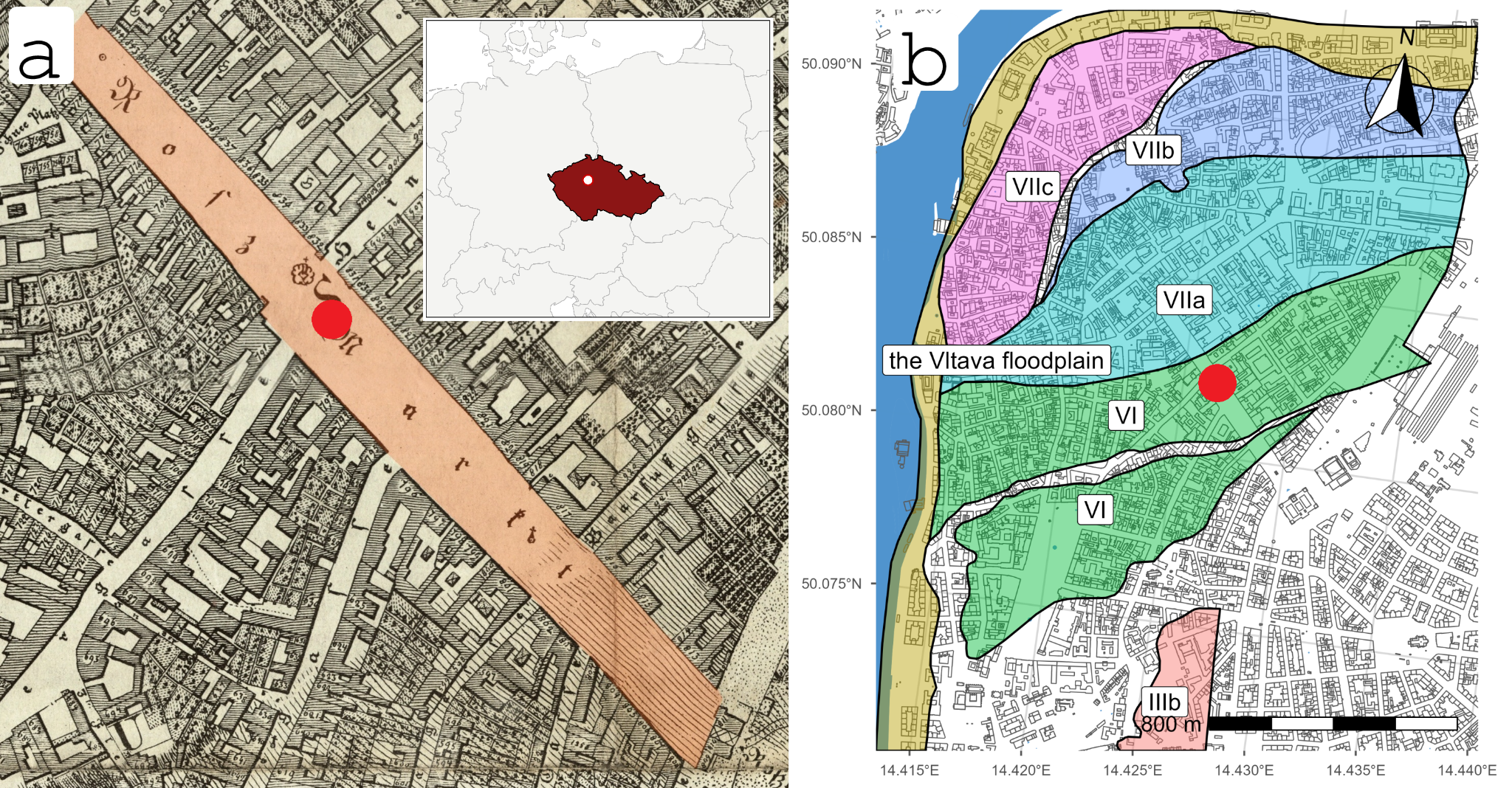
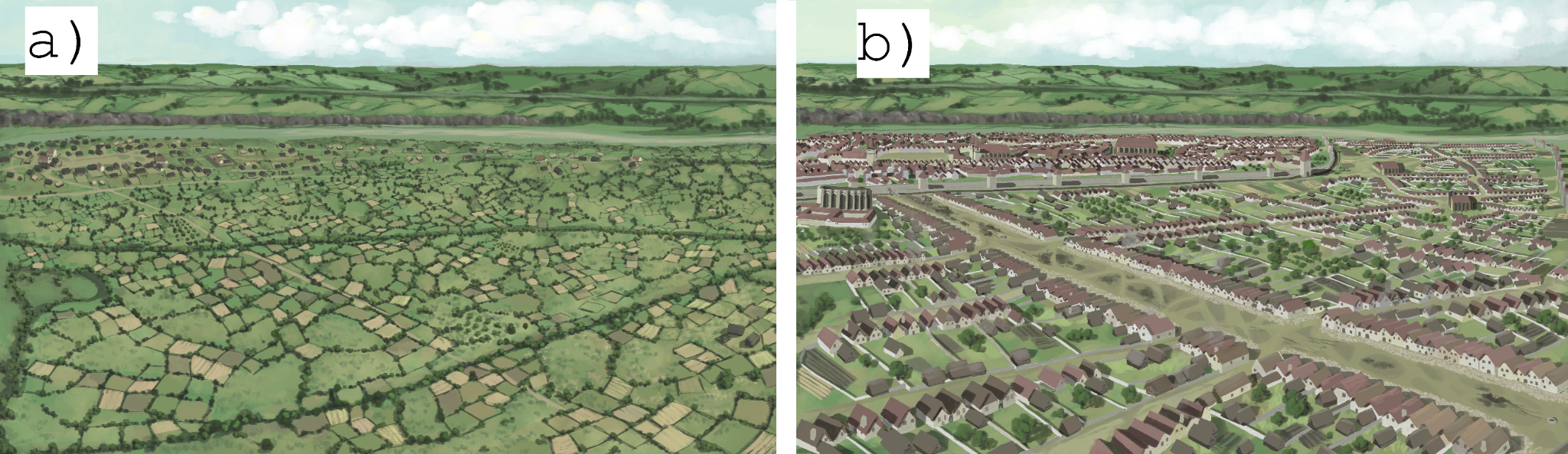
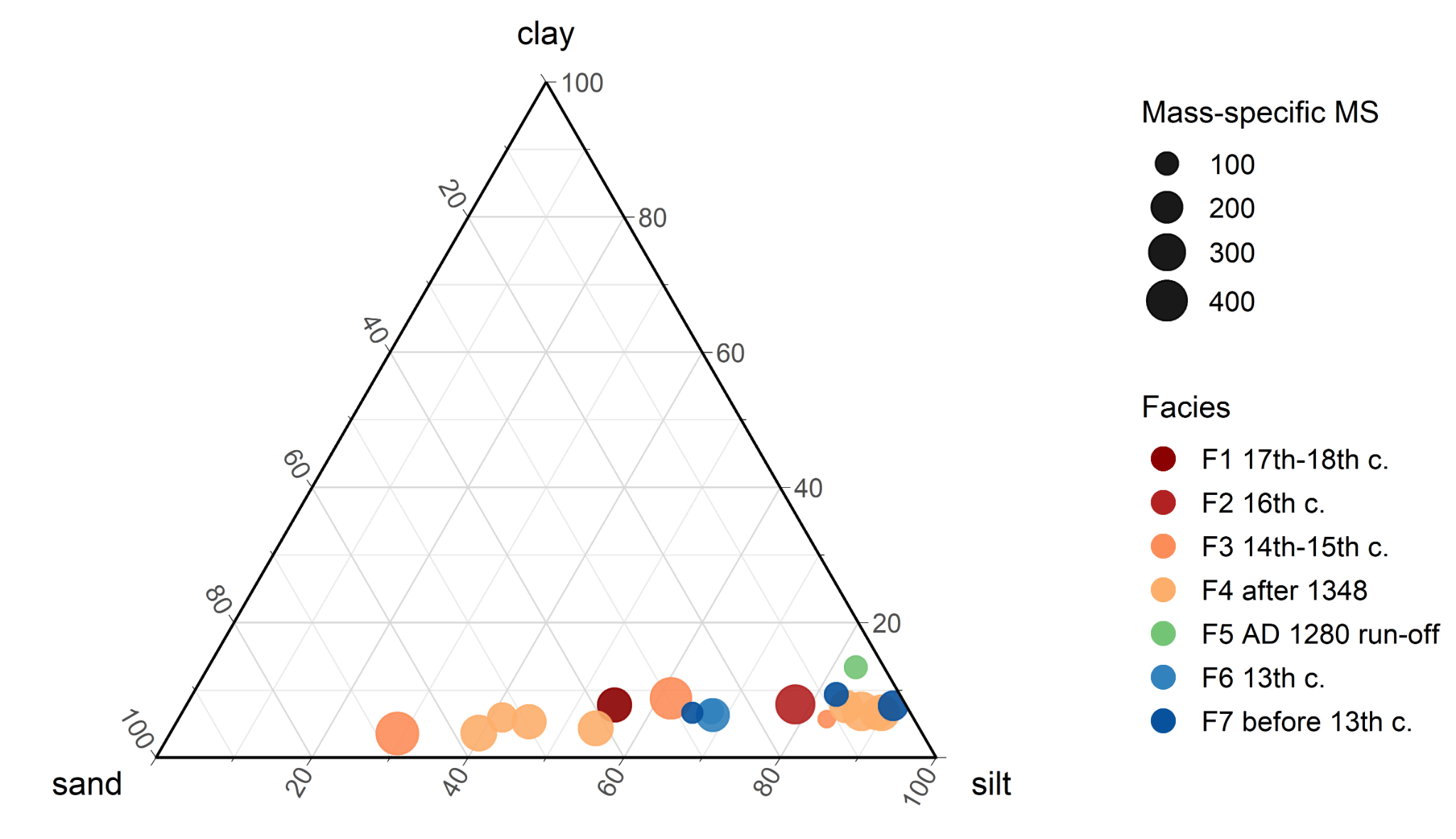
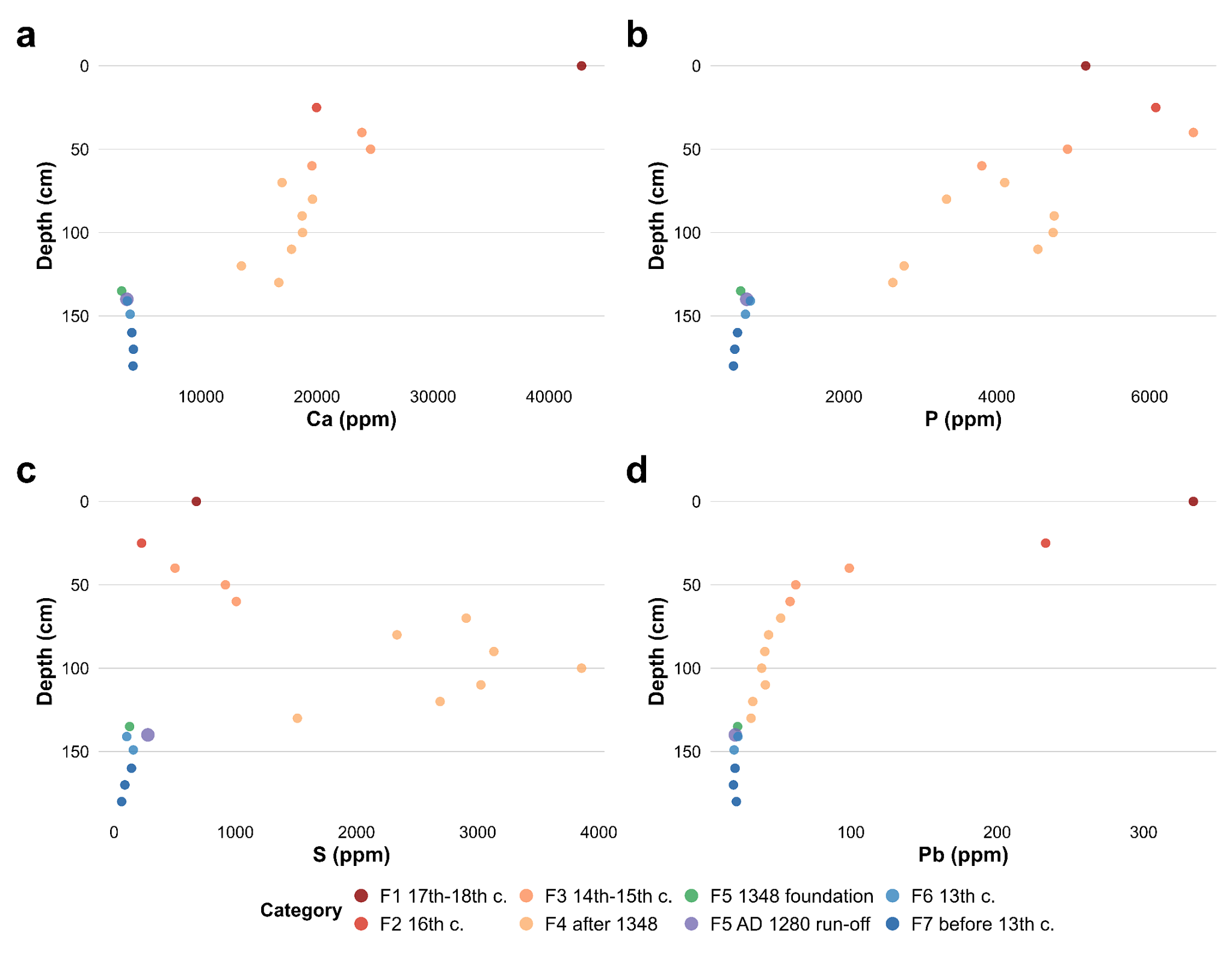
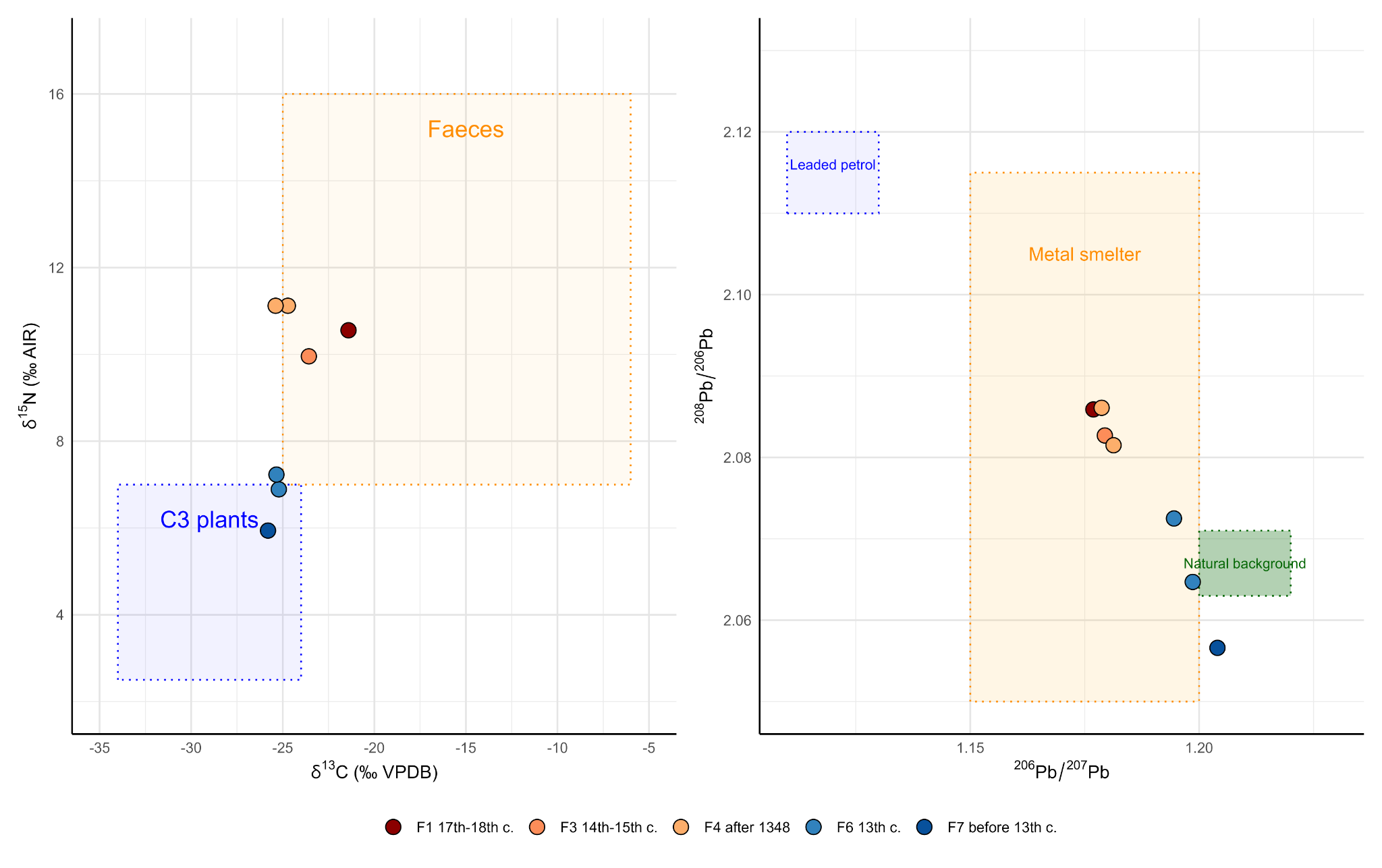
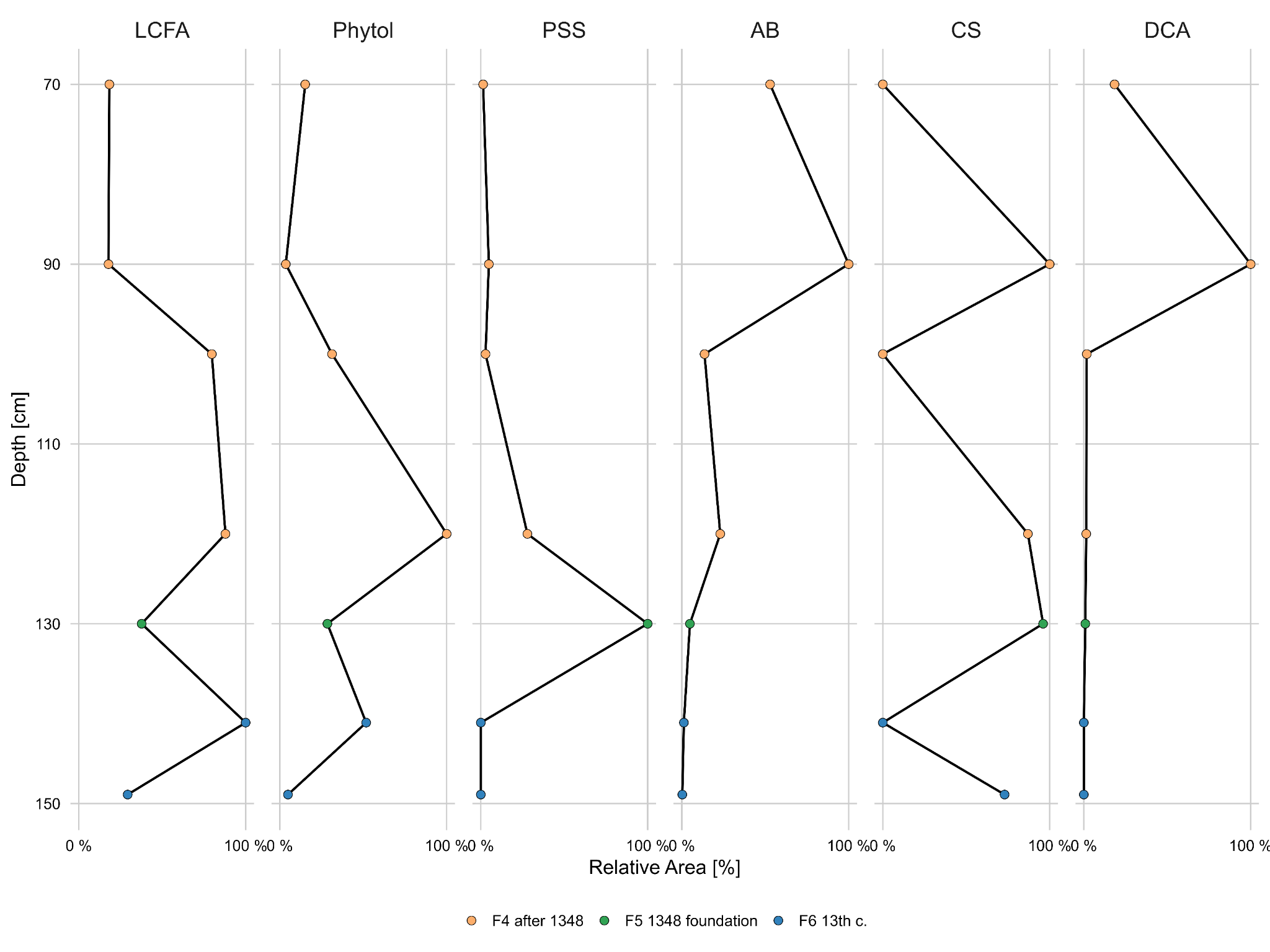
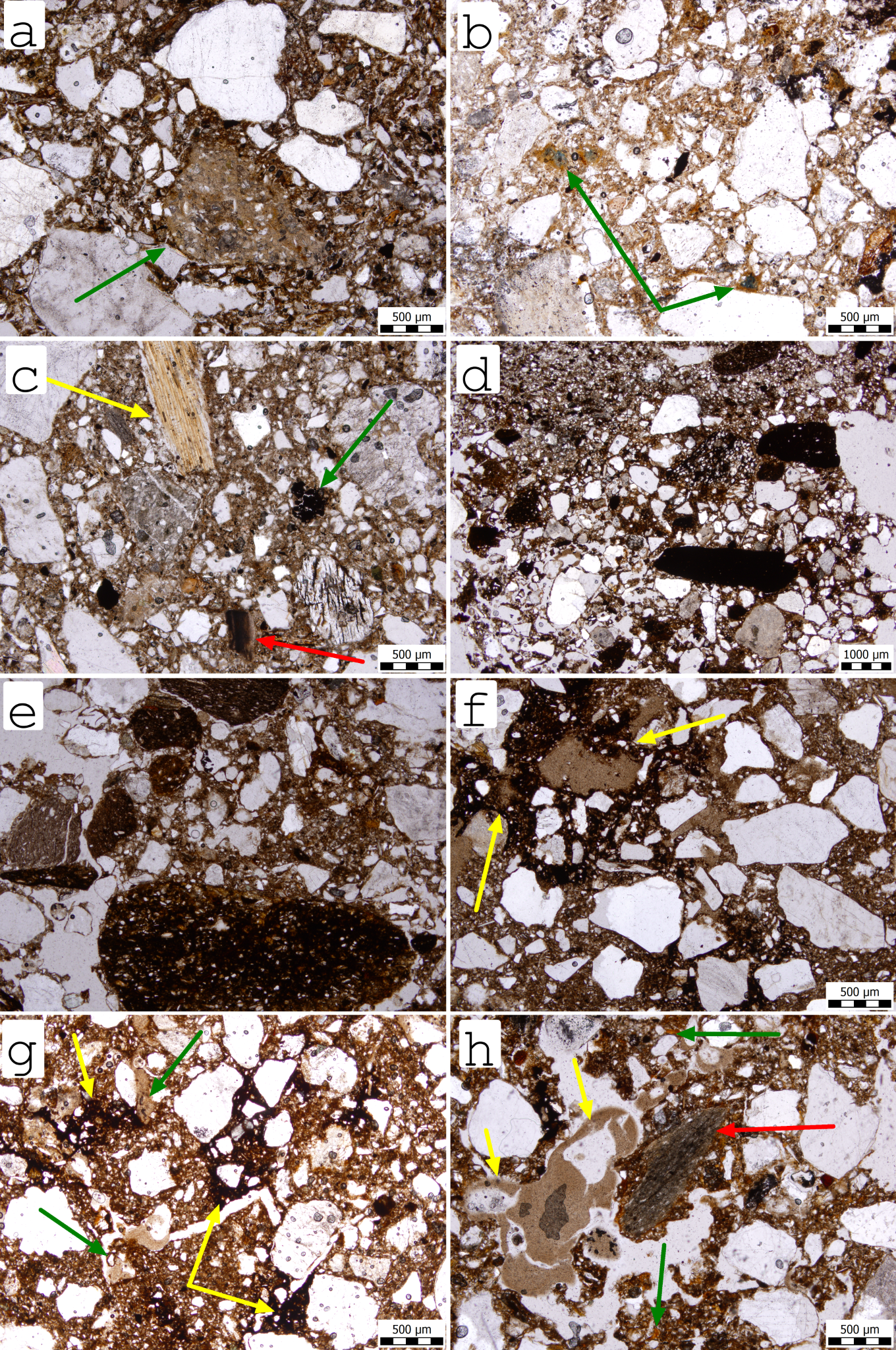
Urban public space is not created only by architecture and artefacts. It also produces a soil and sedimentary archive. Everyday activity, waste, market exchange, erosion, water, craft production and urban change are recorded in this archive.
Wenceslas Square therefore serves as a reference case for studying how long-term urbanisation becomes written into soil.
Martin Janovský, Lenka Lisá, Petr Starec, Jakub Trubač, Sabina Millerová, Michal Štaffl, Jakub Slačálek, Lukáš Kučera, Laszlo Ferenczi, Tomáš Klír.
Open access study, visual supplements, analytical graphs, maps, micromorphological documentation and data layers for further comparison of urban soil archives.