

← Back to Field Notes
Ongoing field research
Sampling the Iron Age gate at Ashdod
This week, we are sampling sediments in the area of the Iron Age gate at the major Philistine site of Ashdod.
2026-07-13 · Ashdod · Israel
Fieldwork at Ashdod
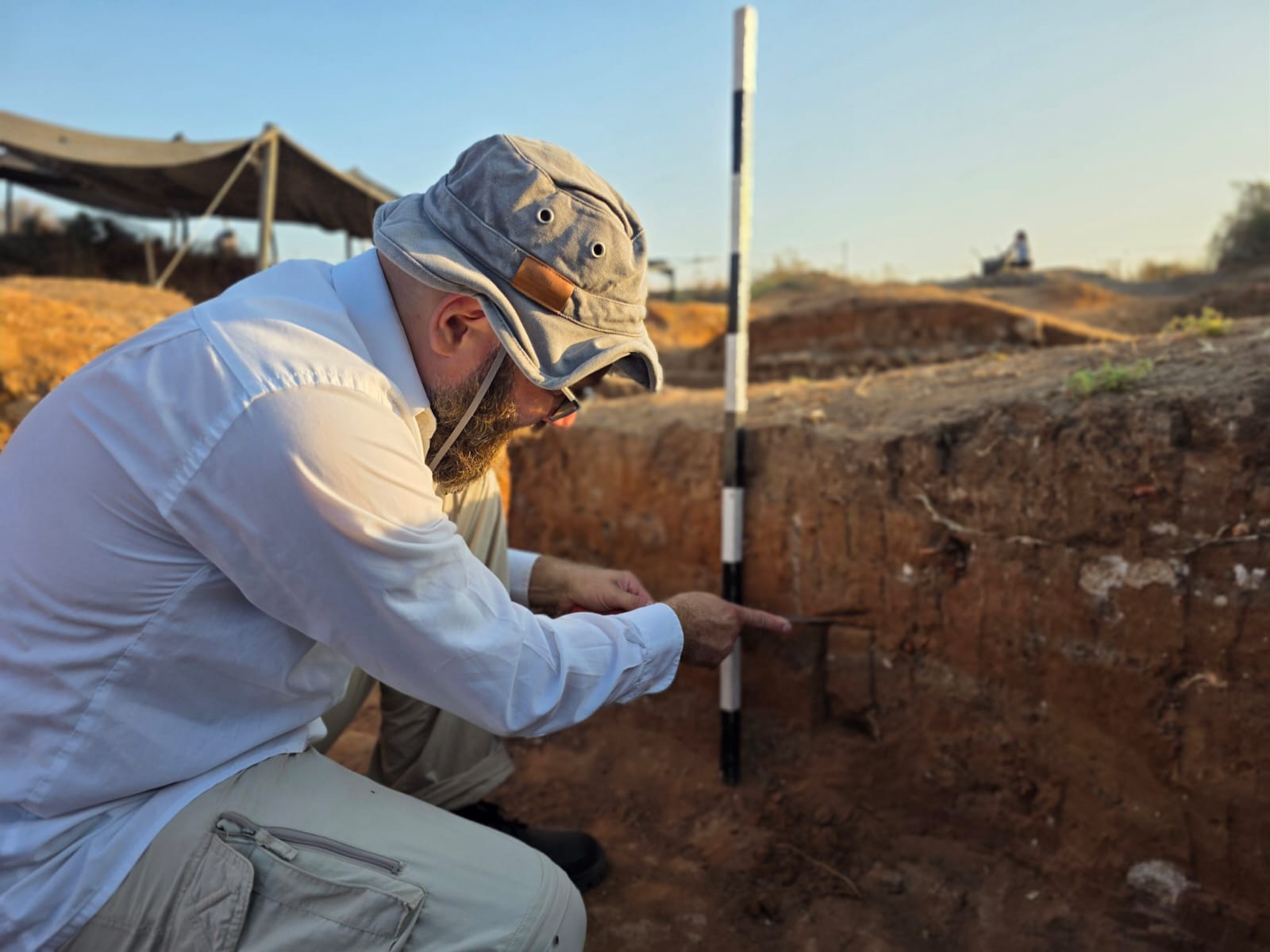
This week, we are working at Tell Ashdod, one of the principal Philistine sites of the southern Levant. I am sampling sediments in the area of the Iron Age gate for further laboratory analyses.
This week, I am in Israel with students from the Department of Archaeology at the Faculty of Arts, Charles University, sampling sediments in the area of the Iron Age gate at the major Philistine site of Ashdod.
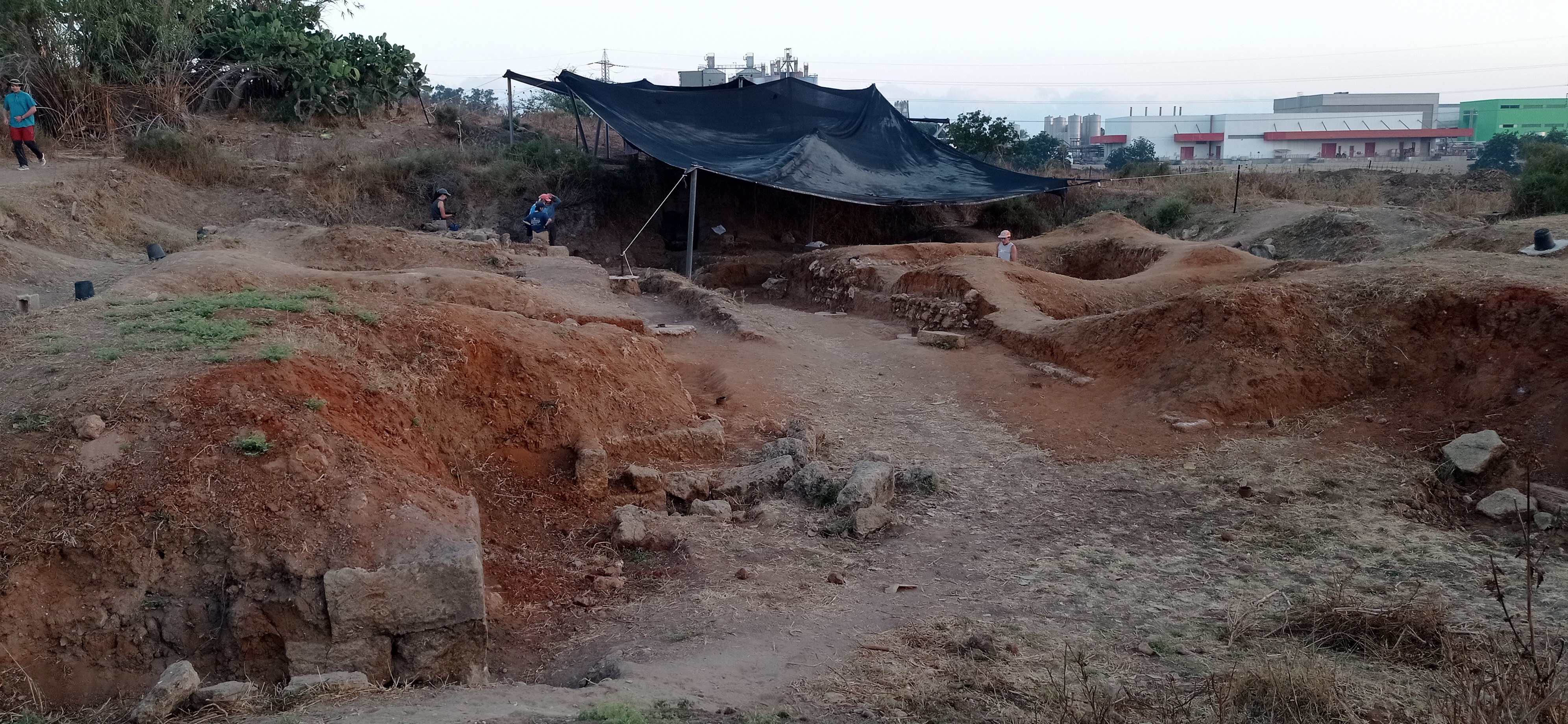
Tell Ashdod was one of the principal urban centres of the Philistines. The site preserves a long settlement sequence together with remains of fortifications, monumental architecture and urban communication areas.
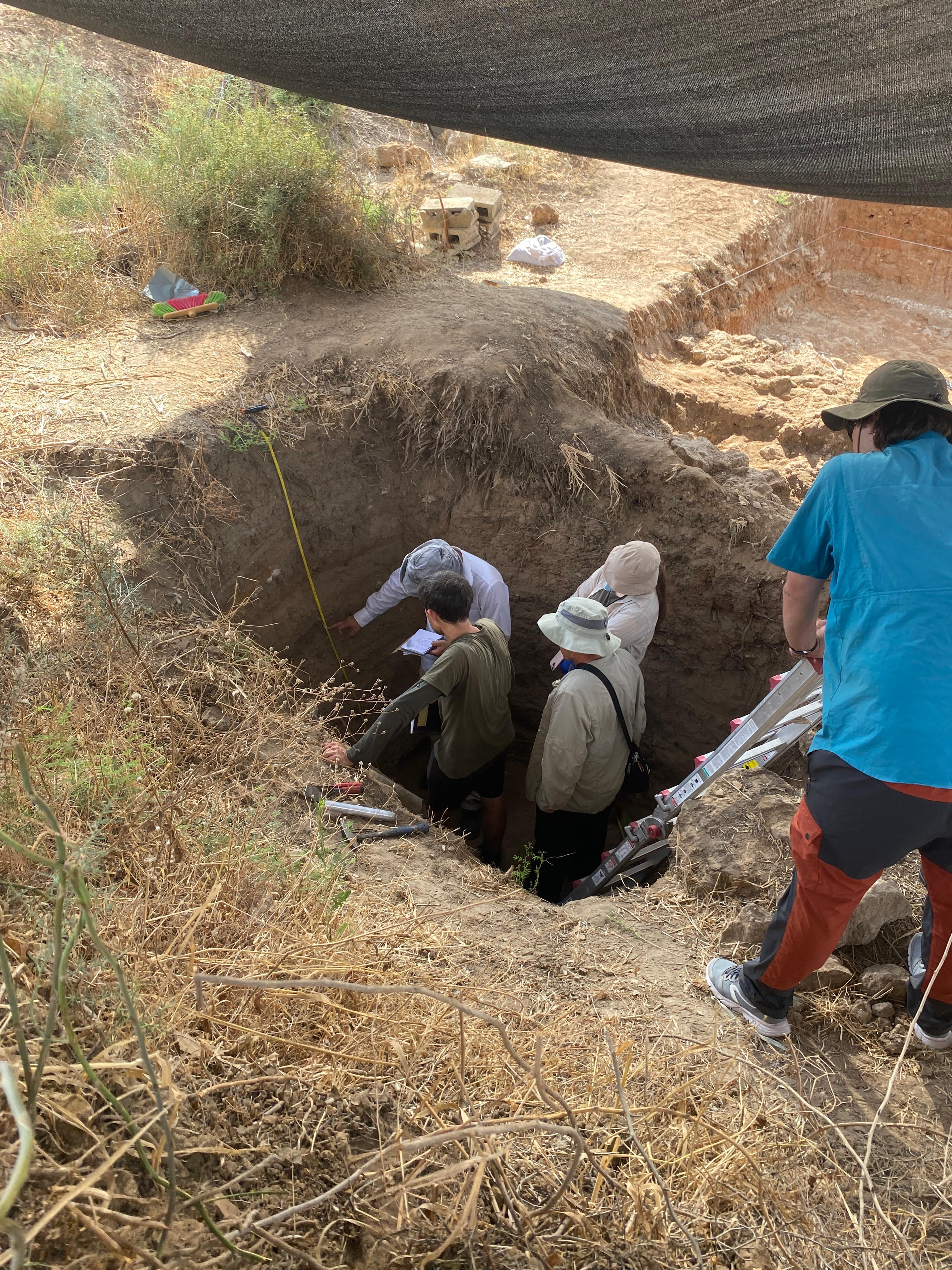
The current work follows sampling carried out during the previous field season in 2025. This year, we are adding another profile that will allow sediments from different parts of the gate area to be compared.
The samples will be used primarily for micromorphological and chemical analyses. Micromorphology examines undisturbed sediments in thin sections under a microscope and helps distinguish processes such as deposition, trampling, reworking and the action of water.
Chemical analyses can identify changes in layer composition, the provenance of deposited material and traces of human activity. Combining both approaches will help reconstruct the formation and use of the area in front of and beneath the gate.
I am assisted in the field by Sabina Miller and Michal Štaffl, team members and students of the Department of Archaeology at the Faculty of Arts, Charles University.
Current work
We are continuing the fieldwork begun in 2025 and adding a further sediment profile to the sampling programme. The new samples will expand the material available for micromorphological and chemical analyses.
Location
Tell Ashdod
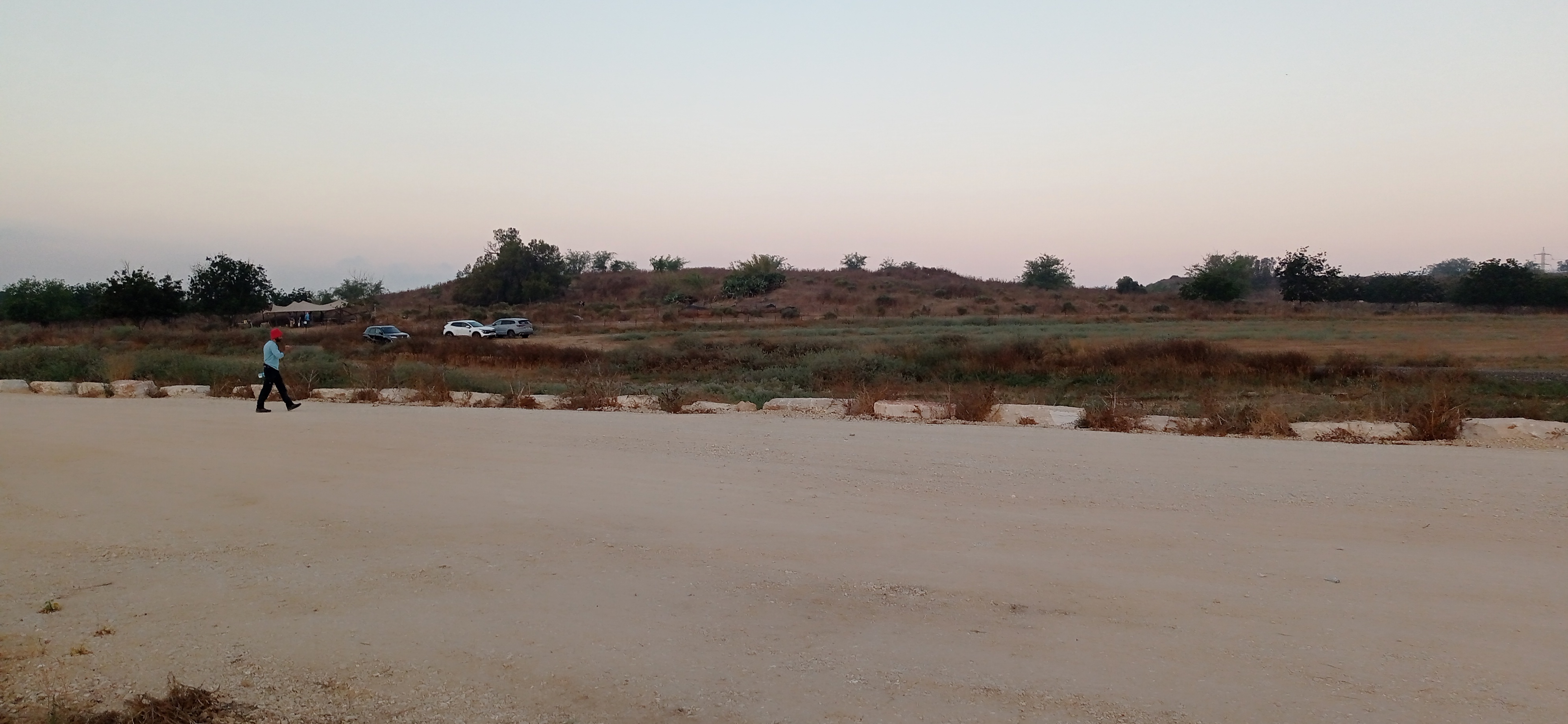
Tell Ashdod is located in the southern coastal region of Israel. The current research takes place in the area of a monumental Iron Age gate that formed part of the fortifications of an important Philistine city.
- coordinates: 31.757500° N, 34.658000° E
- site: Tell Ashdod
- context: Iron Age city gate
- current work: sampling an additional sediment profile
- analyses: micromorphology and chemical analyses
Research questions
- How did the sediments beneath the city gate form?
- Which layers resulted from natural deposition and which from human activity?
- How was the area modified before the construction of the gate?
- Can the new profile be correlated with the profiles sampled in 2025?
- How did the use of the area change during the Iron Age?
What we are investigating
- the stratigraphy of the gate area
- sediment formation and redistribution
- evidence of trampling and human activity
- natural and anthropogenic processes
- correlation of profiles sampled in 2025 and 2026
Preliminary results
Sampling is still in progress. The new profile will supplement the material collected during the previous field season and expand the dataset for micromorphological and chemical analyses.
After the fieldwork, the collected blocks will be prepared for the production of micromorphological thin sections. Additional samples will undergo chemical analyses.
The results will be compared with the documentation and samples collected in 2025. The aim is to correlate the individual profiles and reconstruct the development of the gate area.
At this stage, we are presenting the fieldwork in progress rather than final analytical results.
Current work
We are currently sampling an additional sediment profile in the area of the Iron Age gate.
Fieldwork